Exhausted Car
Timeline
April 2024 - May 2024
Overview
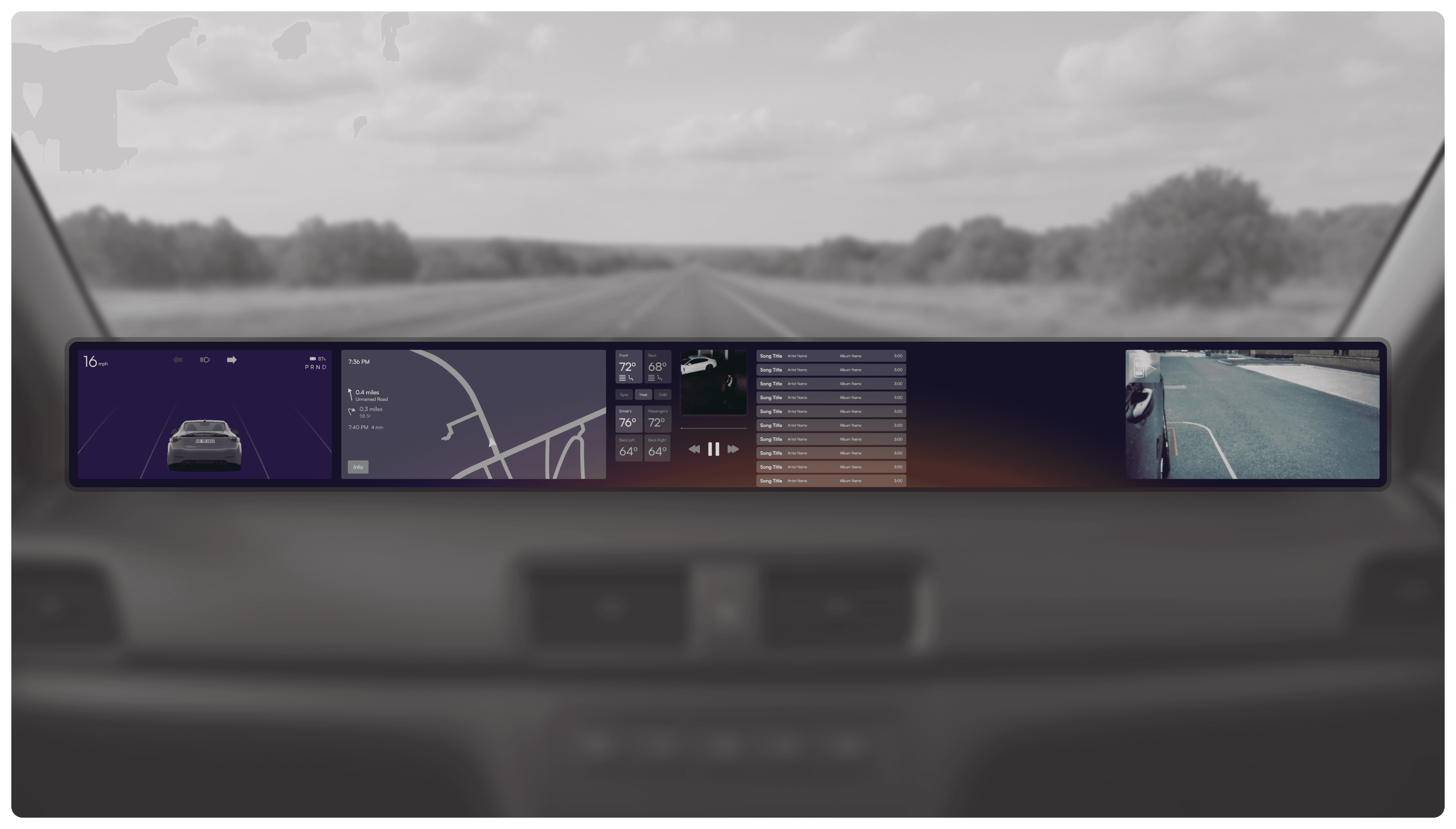
A witty car persona designed into a 40" digital interface to prevent car overusage.
Role
UX UI Designer
Type
Self-Directed
Exhausted Car
Timeline
April 2024 - May 2024
Overview
A witty car persona designed into a 40" digital interface to prevent car overusage.
Role
UX UI Designer
Type
Self-Directed
Exhausted Car
Timeline
April 2024 - May 2024
Overview
A witty car persona designed into a 40" digital interface to prevent car overusage.
Role
UX UI Designer
Type
Self-Directed
Exhausted Car
Timeline
April 2024 - May 2024
Overview
A witty car persona designed into a 40" digital interface to prevent car overusage.
Role
UX UI Designer
Type
Self-Directed
Exhausted Car
Timeline
April 2024 - May 2024
Overview
A witty car persona designed into a 40" digital interface to prevent car overusage.
Role
UX UI Designer
Type
Self-Directed
A sneak peak of the project.
Overview
A sneak peak of the project.
Overview
A sneak peak of the project.
Overview
A sneak peak of the project.
Overview
A sneak peak of the project.
Overview
The screen response to the car being unlocked.
Video
The screen response to the car being unlocked.
Video
The screen response to the car being unlocked.
Video
The screen response to the car being unlocked.
Video
The screen response to the car being unlocked.
Video
Problem
We don't like walking awkwardly long distances.
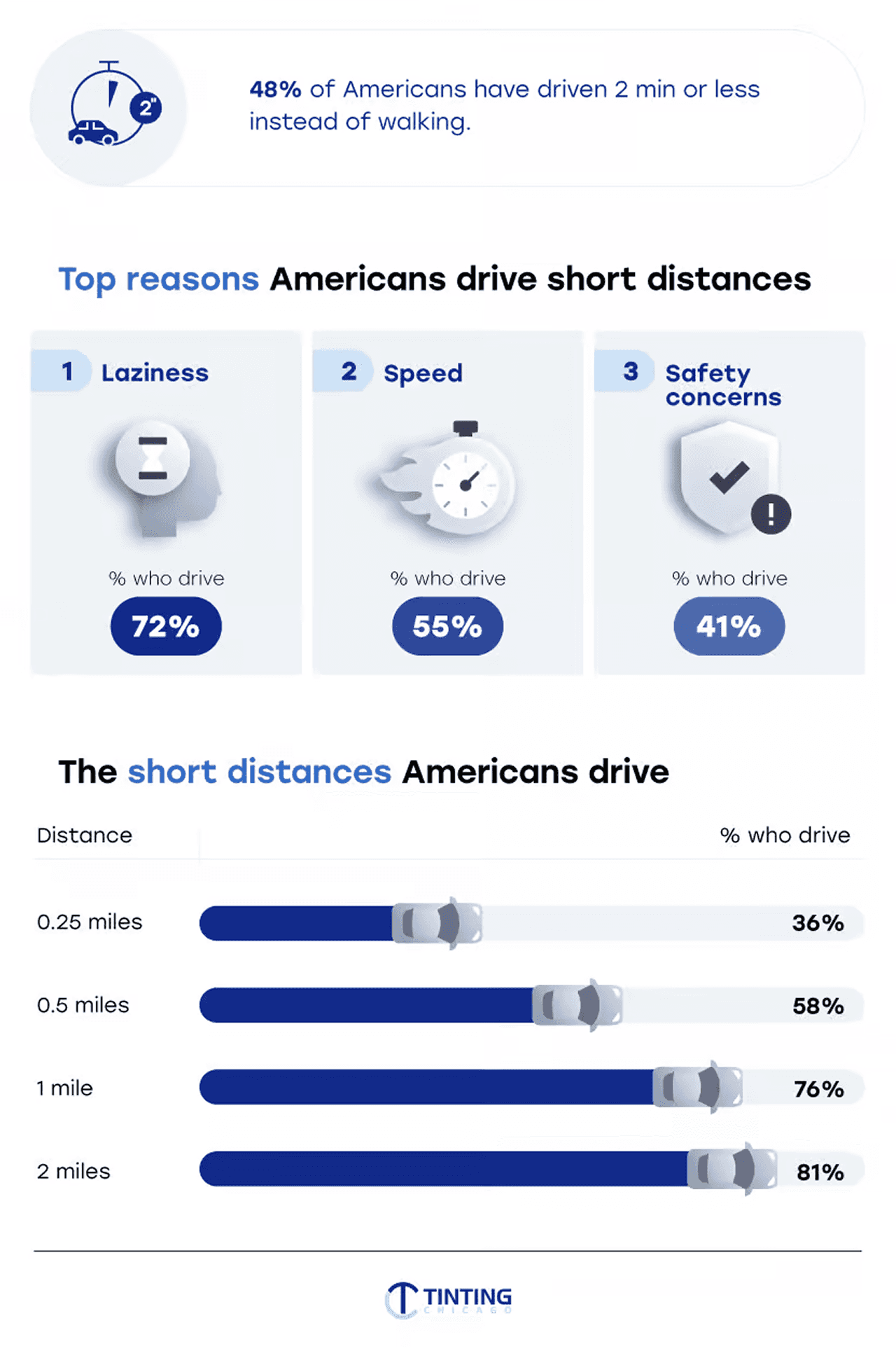
Everyone has experienced heavy traffic jams during busy hours. Have you ever wondered how many of them are actually driving substantial distances? How many cars are just going a short distance, unncessarily feeding into the congestion?
Well, regardless of busy hours, turns out Americans really love to drive their short distances. The graphic on the right(Tinting US Chicago) demonstrate the baffling numbers of short distance driving.
I decided to tackle this as an interaction design problem. My goal was to prevent excess usage of cars to reduce emissions from cars and promote healthy energy consumption practices.
Now the question was how—How would I discourage people from driving short distances on their cars?
Everyone has experienced heavy traffic jams during busy hours. Have you ever wondered how many of them are actually driving substantial distances? How many cars are just going a short distance, but are feeding into the congestion?
Well, regardless of busy hours, turns out Americans really love to drive their short distances. The graphic on the right(Tinting US Chicago) demonstrate the baffling numbers of short distance driving.
I decided to tackle this as an interaction design problem. My goal was to encourage reducing excess usage of cars to reduce emissions from cars and promote healthy energy consumption practices.
Now the question was how—How could I discourage people from driving short distances on their cars?
Everyone has experienced heavy traffic jams during busy hours. Have you ever wondered how many of them are actually driving substantial distances? How many cars are just going a short distance, but are feeding into the congestion?
Well, regardless of busy hours, turns out Americans really love to drive their short distances. The graphic on the right(Tinting US Chicago) demonstrate the baffling numbers of short distance driving.
I decided to tackle this as an interaction design problem. My goal was to encourage reducing excess usage of cars to reduce emissions from cars and promote healthy energy consumption practices.
Now the question was how—How could I discourage people from driving short distances on their cars?
Everyone has experienced heavy traffic jams during busy hours. Have you ever wondered how many of them are actually driving substantial distances? How many cars are just going a short distance, but are feeding into the congestion?
Well, regardless of busy hours, turns out Americans really love to drive their short distances. The graphic on the right(Tinting US Chicago) demonstrate the baffling numbers of short distance driving.
I decided to tackle this as an interaction design problem. My goal was to encourage reducing excess usage of cars to reduce emissions from cars and promote healthy energy consumption practices.
Now the question was how—How could I discourage people from driving short distances on their cars?
Everyone has experienced heavy traffic jams during busy hours. Have you ever wondered how many of them are actually driving substantial distances? How many cars are just going a short distance, but are feeding into the congestion?
Well, regardless of busy hours, turns out Americans really love to drive their short distances. The graphic on the right(Tinting US Chicago) demonstrate the baffling numbers of short distance driving.
I decided to tackle this as an interaction design problem. My goal was to encourage reducing excess usage of cars to reduce emissions from cars and promote healthy energy consumption practices.
Now the question was how—How could I discourage people from driving short distances on their cars?
Source: Tinting US Chicago
Image
Medium
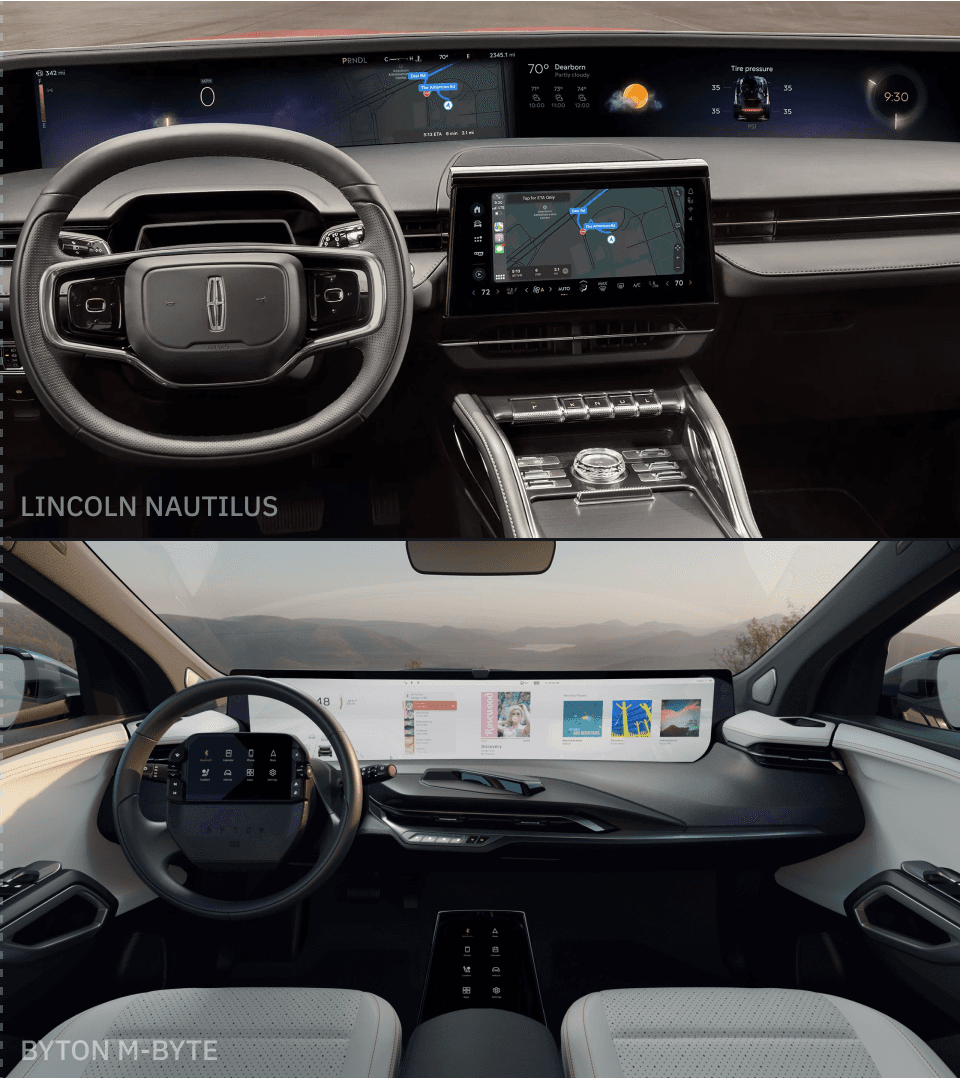
Exploring the future of car interfaces.
I decided to approach this through the increasingly popular screen car dashboard format—a 40” touch-free interface, stretched along the bottom of the windshield. Inspired by the Lincoln Nautilus and Byton M-Byte, the dashboard would interact with the physical buttons in the car, not by direct touching.
40" Digital Car Interfaces
Image
Medium
Exploring the future of car interfaces.
I decided to approach this through the increasingly popular screen car dashboard format—a 40” touch-free interface, stretched along the bottom of the windshield. Inspired by the Lincoln Nautilus and Byton M-Byte, the dashboard would interact with the physical buttons in the car, not by direct touching.
40" Digital Car Interfaces
Image
Medium
Exploring the future of car interfaces.
I decided to approach this through the increasingly popular screen car dashboard format—a 40” touch-free interface, stretched along the bottom of the windshield. Inspired by the Lincoln Nautilus and Byton M-Byte, the dashboard would interact with the physical buttons in the car, not by direct touching.
40" Digital Car Interfaces
Image
Medium
Exploring the future of car interfaces.
I decided to approach this through the increasingly popular screen car dashboard format—a 40” touch-free interface, stretched along the bottom of the windshield. Inspired by the Lincoln Nautilus and Byton M-Byte, the dashboard would interact with the physical buttons in the car, not by direct touching.
40" Digital Car Interfaces
Image
Medium
Exploring the future of car interfaces.
I decided to approach this through the increasingly popular screen car dashboard format—a 40” touch-free interface, stretched along the bottom of the windshield. Inspired by the Lincoln Nautilus and Byton M-Byte, the dashboard would interact with the physical buttons in the car, not by direct touching.
40" Digital Car Interfaces
Image
The overall screen layout.
Composition
The overall screen layout.
Composition
The overall screen layout.
Composition
The overall screen layout.
Composition
The overall screen layout.
Composition
Image
Image
Image
Image
Image
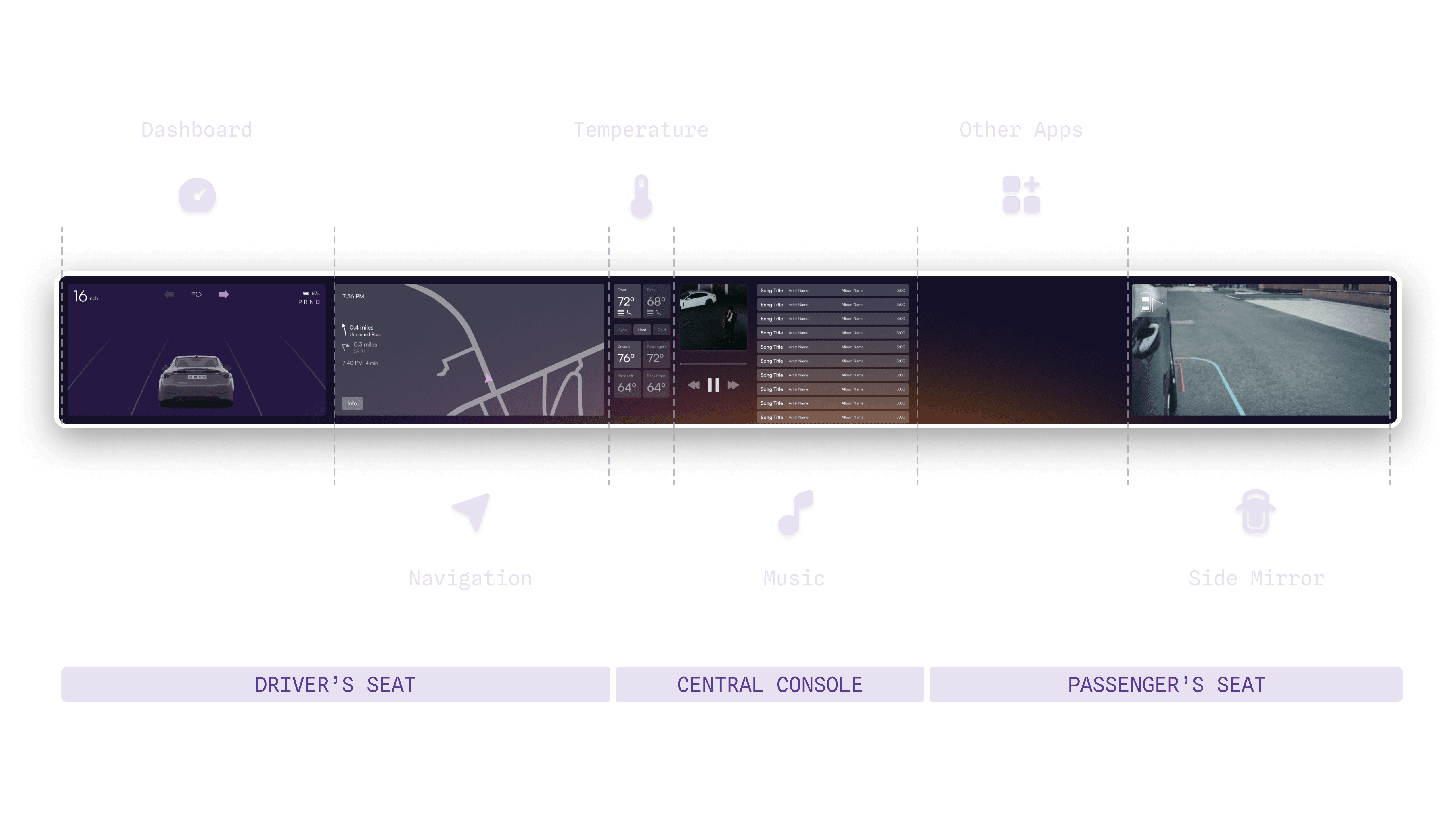
The modern necessities in a car.
Based on the area of the driver's seat, central console, and the passenger's seat, the functions essentials for driving and infotainment were separated. The dashboard gauges and navigation were centered around the driver, the temperature and music above the central console, a flexible screen area for other infotainment content and side mirror view visible iin front of the passenger's seat.
The modern necessities in a car.
Based on the area of the driver's seat, central console, and the passenger's seat, the functions essentials for driving and infotainment were separated. The dashboard gauges and navigation were centered around the driver, the temperature and music above the central console, a flexible screen area for other infotainment content and side mirror view visible iin front of the passenger's seat.
The modern necessities in a car.
Based on the area of the driver's seat, central console, and the passenger's seat, the functions essentials for driving and infotainment were separated. The dashboard gauges and navigation were centered around the driver, the temperature and music above the central console, a flexible screen area for other infotainment content and side mirror view visible iin front of the passenger's seat.
The modern necessities in a car.
Based on the area of the driver's seat, central console, and the passenger's seat, the functions essentials for driving and infotainment were separated. The dashboard gauges and navigation were centered around the driver, the temperature and music above the central console, a flexible screen area for other infotainment content and side mirror view visible iin front of the passenger's seat.
The modern necessities in a car.
Based on the area of the driver's seat, central console, and the passenger's seat, the functions essentials for driving and infotainment were separated. The dashboard gauges and navigation were centered around the driver, the temperature and music above the central console, a flexible screen area for other infotainment content and side mirror view visible iin front of the passenger's seat.
The onboarding experience.
Flows
The onboarding experience.
Flows
The onboarding experience.
Flows
The onboarding experience.
Flows
The onboarding experience.
Flows
The onboarding information.
Video
The onboarding information.
Video
The onboarding information.
Video
The onboarding information.
Video
The onboarding information.
Video
Informing the drivers what they're getting themselves into.
The feature I designed would be an upgrade or an option for a car. Not a necessity, but a feature people could voluntarily sign up to. To make sure they understood what they were getting themselves into, the onboarding experience was designed thoroughly to showcase all the new features they would be met with.
Informing the drivers what they're getting themselves into.
The feature I designed would be an upgrade or an option for a car. Not a necessity, but a feature people could voluntarily sign up to. To make sure they understood what they were getting themselves into, the onboarding experience was designed thoroughly to showcase all the new features they would be met with.
Informing the drivers what they're getting themselves into.
The feature I designed would be an upgrade or an option for a car. Not a necessity, but a feature people could voluntarily sign up to. To make sure they understood what they were getting themselves into, the onboarding experience was designed thoroughly to showcase all the new features they would be met with.
Informing the drivers what they're getting themselves into.
The feature I designed would be an upgrade or an option for a car. Not a necessity, but a feature people could voluntarily sign up to. To make sure they understood what they were getting themselves into, the onboarding experience was designed thoroughly to showcase all the new features they would be met with.
Informing the drivers what they're getting themselves into.
The feature I designed would be an upgrade or an option for a car. Not a necessity, but a feature people could voluntarily sign up to. To make sure they understood what they were getting themselves into, the onboarding experience was designed thoroughly to showcase all the new features they would be met with.
Using the navigation.
Flows
Using the navigation.
Flows
Using the navigation.
Flows
Using the navigation.
Flows
Using the navigation.
Flows
Response to entering the a short distance destination.
Video
Response to entering the a short distance destination.
Video
Response to entering the a short distance destination.
Video
Response to entering the a short distance destination.
Video
Response to entering the a short distance destination.
Video
A nudge against short distance driving.
To encourage a bit of self-reflection in the driver, the car, like the name suggests, expresses its exhaustion when a nearby destination is entered. Instead of passively preventing the user driving the short distance, the car actively "speaks" to the driver through its witty response. And for the final kick, the final question, inspired by the roach motel dark pattern, is worded in a way that makes the user feel bad for continuing with their decision.
Upon confirming to the guilty act, the car navigation is ready to go. Oh, but the music has now changed to their least favorite genre—country music. They will not be able to change the music as they make it to their destination, and that is karma.
A nudge against short distance driving.
To encourage a bit of self-reflection in the driver, the car, like the name suggests, expresses its exhaustion when a nearby destination is entered. Instead of passively preventing the user driving the short distance, the car actively "speaks" to the driver through its witty response. And for the final kick, the final question, inspired by the roach motel dark pattern, is worded in a way that makes the user feel bad for continuing with their decision.
Upon confirming to the guilty act, the car navigation is ready to go. Oh, but the music has now changed to their least favorite genre—country music. They will not be able to change the music as they make it to their destination, and that is karma.
A nudge against short distance driving.
To encourage a bit of self-reflection in the driver, the car, like the name suggests, expresses its exhaustion when a nearby destination is entered. Instead of passively preventing the user driving the short distance, the car actively "speaks" to the driver through its witty response. And for the final kick, the final question, inspired by the roach motel dark pattern, is worded in a way that makes the user feel bad for continuing with their decision.
Upon confirming to the guilty act, the car navigation is ready to go. Oh, but the music has now changed to their least favorite genre—country music. They will not be able to change the music as they make it to their destination, and that is karma.
A nudge against short distance driving.
To encourage a bit of self-reflection in the driver, the car, like the name suggests, expresses its exhaustion when a nearby destination is entered. Instead of passively preventing the user driving the short distance, the car actively "speaks" to the driver through its witty response. And for the final kick, the final question, inspired by the roach motel dark pattern, is worded in a way that makes the user feel bad for continuing with their decision.
Upon confirming to the guilty act, the car navigation is ready to go. Oh, but the music has now changed to their least favorite genre—country music. They will not be able to change the music as they make it to their destination, and that is karma.
A nudge against short distance driving.
To encourage a bit of self-reflection in the driver, the car, like the name suggests, expresses its exhaustion when a nearby destination is entered. Instead of passively preventing the user driving the short distance, the car actively "speaks" to the driver through its witty response. And for the final kick, the final question, inspired by the roach motel dark pattern, is worded in a way that makes the user feel bad for continuing with their decision.
Upon confirming to the guilty act, the car navigation is ready to go. Oh, but the music has now changed to their least favorite genre—country music. They will not be able to change the music as they make it to their destination, and that is karma.
Getting back in the car.
Now that the driver has run a quick errand, they will try to get back on the car. Perhaps they've gone to a nearby McDonalds to grab some lunch.
Flows
Getting back in the car.
Now that the driver has run a quick errand, they will try to get back on the car. Perhaps they've gone to a nearby McDonalds to grab some lunch.
Flows
Getting back in the car.
Now that the driver has run a quick errand, they will try to get back on the car. Perhaps they've gone to a nearby McDonalds to grab some lunch.
Flows
Getting back in the car.
Now that the driver has run a quick errand, they will try to get back on the car. Perhaps they've gone to a nearby McDonalds to grab some lunch.
Flows
Getting back in the car.
Now that the driver has run a quick errand, they will try to get back on the car. Perhaps they've gone to a nearby McDonalds to grab some lunch.
Flows
Remaining time countdown upon trying to open the car door.
Video
Remaining time countdown upon trying to open the car door.
Video
Remaining time countdown upon trying to open the car door.
Video
Remaining time countdown upon trying to open the car door.
Video
Remaining time countdown upon trying to open the car door.
Video
Discouraging frequent and insignificant uses of the car.
The car is now locked. As in, the driver will not be able to unlock it even when trying to unlock it with their key. As the video shows, the car has set a time that it must rest before being able to drive again.
Discouraging frequent and insignificant uses of the car.
The car is now locked. As in, the driver will not be able to unlock it even when trying to unlock it with their key. As the video shows, the car has set a time that it must rest before being able to drive again.
Discouraging frequent and insignificant uses of the car.
The car is now locked. As in, the driver will not be able to unlock it even when trying to unlock it with their key. As the video shows, the car has set a time that it must rest before being able to drive again.
Discouraging frequent and insignificant uses of the car.
The car is now locked. As in, the driver will not be able to unlock it even when trying to unlock it with their key. As the video shows, the car has set a time that it must rest before being able to drive again.
Discouraging frequent and insignificant uses of the car.
The car is now locked. As in, the driver will not be able to unlock it even when trying to unlock it with their key. As the video shows, the car has set a time that it must rest before being able to drive again.
The car's response to trying to drive again after a short drive.
Video
The car's response to trying to drive again after a short drive.
Video
The car's response to trying to drive again after a short drive.
Video
The car's response to trying to drive again after a short drive.
Video
The car's response to trying to drive again after a short drive.
Video
Just as the driver watches the countdown tick by, the message panel from earlier comes alive... And it suggests some other activities to their owner, but not is receptive to feedback whatsoever. Again, as it is an exhausted car, it quickly returns to taking a break.
Just as the driver watches the countdown tick by, the message panel from earlier comes alive... And it suggests some other activities to their owner, but not is receptive to feedback whatsoever. Again, as it is an exhausted car, it quickly returns to taking a break.
Just as the driver watches the countdown tick by, the message panel from earlier comes alive... And it suggests some other activities to their owner, but not is receptive to feedback whatsoever. Again, as it is an exhausted car, it quickly returns to taking a break.
Just as the driver watches the countdown tick by, the message panel from earlier comes alive... And it suggests some other activities to their owner, but not is receptive to feedback whatsoever. Again, as it is an exhausted car, it quickly returns to taking a break.
Just as the driver watches the countdown tick by, the message panel from earlier comes alive... And it suggests some other activities to their owner, but not is receptive to feedback whatsoever. Again, as it is an exhausted car, it quickly returns to taking a break.
Bypassing the lock.
Flows
Bypassing the lock.
Flows
Bypassing the lock.
Flows
Bypassing the lock.
Flows
Bypassing the lock.
Flows
The bypass sequence to get past the timer.
Video
The bypass sequence to get past the timer.
Video
The bypass sequence to get past the timer.
Video
The bypass sequence to get past the timer.
Video
The bypass sequence to get past the timer.
Video
Preparation in the case of emergencies.
Driving short distances aren't only for running errands, driving becomes one of the most important ability in the case of an emergency. To accommodate for such cases, a bypass feature was created. Inspired by the Screen Time feature on phones, the bypass requires a couple steps, but are not difficult to achieve.
This feature should definitely not be abused. Ultimately it is up to the user to take these reminders from the car and change their actions accordingly. Though it is an exhausted car, it prioritizes its role as a car—a product that enables freedom in distance to the user.
Preparation in the case of emergencies.
Driving short distances aren't only for running errands, driving becomes one of the most important ability in the case of an emergency. To accommodate for such cases, a bypass feature was created. Inspired by the Screen Time feature on phones, the bypass requires a couple steps, but are not difficult to achieve.
This feature should definitely not be abused. Ultimately it is up to the user to take these reminders from the car and change their actions accordingly. Though it is an exhausted car, it prioritizes its role as a car—a product that enables freedom in distance to the user.
Preparation in the case of emergencies.
Driving short distances aren't only for running errands, driving becomes one of the most important ability in the case of an emergency. To accommodate for such cases, a bypass feature was created. Inspired by the Screen Time feature on phones, the bypass requires a couple steps, but are not difficult to achieve.
This feature should definitely not be abused. Ultimately it is up to the user to take these reminders from the car and change their actions accordingly. Though it is an exhausted car, it prioritizes its role as a car—a product that enables freedom in distance to the user.
Preparation in the case of emergencies.
Driving short distances aren't only for running errands, driving becomes one of the most important ability in the case of an emergency. To accommodate for such cases, a bypass feature was created. Inspired by the Screen Time feature on phones, the bypass requires a couple steps, but are not difficult to achieve.
This feature should definitely not be abused. Ultimately it is up to the user to take these reminders from the car and change their actions accordingly. Though it is an exhausted car, it prioritizes its role as a car—a product that enables freedom in distance to the user.
Preparation in the case of emergencies.
Driving short distances aren't only for running errands, driving becomes one of the most important ability in the case of an emergency. To accommodate for such cases, a bypass feature was created. Inspired by the Screen Time feature on phones, the bypass requires a couple steps, but are not difficult to achieve.
This feature should definitely not be abused. Ultimately it is up to the user to take these reminders from the car and change their actions accordingly. Though it is an exhausted car, it prioritizes its role as a car—a product that enables freedom in distance to the user.
The value of fun.
Designing this project was an absolute delight. I had wanted to design interfaces within cars for a while, and being able to approach car interactions in an unconventional method was very exciting. However, addressing an environmental concern caused by laziness was not easy. Many of my previous projects were very practical, meaning user attention was often guaranteed for them. So making users NOT want to do something they desired was an entirely new type of problem to me. Luckily, I quickly remembered an internet post that shared a witty solution to a problem caused by laziness—misaimed urination in men's bathrooms (in Korea). These men would not aim at urinals accurately, and were making the restroom unhygenic and difficult to clean. Incame the ingenious solution. They pasted a (waterproof) sticker of a fly inside the urinal, and the restroom immediately began to stay cleaner. You might be asking how this relates. Well, through that example I realized how powerful humor was in making people pay attention. Approaching a problem that was unrelated to how practical a product meant I had to capture the users' attention in a new way. This led me to creating a persona for the car, and had it react in a way that would make the users WANT to pay attention. I think this idea was successful, as many people found the project to be interesting once they started seeing the dialogue. Although, there are a couple things I'd like to edit, like making the locked door message show up in giant letters on the screen to improve legibility. But all in all, I had a lot of fun designing this project, and learned a lot. Especially the process of discovering the solution—it taught me the irreplaceable value of fun and wit, and helped me realize how different solutions could look. I'd be quite excited if I get to design a solution like this in the industry someday. Well, I hope this idea brought you some delight today like it did for me. Thanks for reading this long letter!
Takeaway letter
The value of fun.
Designing this project was an absolute delight. I had wanted to design interfaces within cars for a while, and being able to approach car interactions in an unconventional method was very exciting. However, addressing an environmental concern caused by laziness was not easy. Many of my previous projects were very practical, meaning user attention was often guaranteed for them. So making users NOT want to do something they desired was an entirely new type of problem to me. Luckily, I quickly remembered an internet post that shared a witty solution to a problem caused by laziness—misaimed urination in men's bathrooms (in Korea). These men would not aim at urinals accurately, and were making the restroom unhygenic and difficult to clean. Incame the ingenious solution. They pasted a (waterproof) sticker of a fly inside the urinal, and the restroom immediately began to stay cleaner. You might be asking how this relates. Well, through that example I realized how powerful humor was in making people pay attention. Approaching a problem that was unrelated to how practical a product meant I had to capture the users' attention in a new way. This led me to creating a persona for the car, and had it react in a way that would make the users WANT to pay attention. I think this idea was successful, as many people found the project to be interesting once they started seeing the dialogue. Although, there are a couple things I'd like to edit, like making the locked door message show up in giant letters on the screen to improve legibility. But all in all, I had a lot of fun designing this project, and learned a lot. Especially the process of discovering the solution—it taught me the irreplaceable value of fun and wit, and helped me realize how different solutions could look. I'd be quite excited if I get to design a solution like this in the industry someday. Well, I hope this idea brought you some delight today like it did for me. Thanks for reading this long letter!
Takeaway letter
The value of fun.
Designing this project was an absolute delight. I had wanted to design interfaces within cars for a while, and being able to approach car interactions in an unconventional method was very exciting. However, addressing an environmental concern caused by laziness was not easy. Many of my previous projects were very practical, meaning user attention was often guaranteed for them. So making users NOT want to do something they desired was an entirely new type of problem to me. Luckily, I quickly remembered an internet post that shared a witty solution to a problem caused by laziness—misaimed urination in men's bathrooms (in Korea). These men would not aim at urinals accurately, and were making the restroom unhygenic and difficult to clean. Incame the ingenious solution. They pasted a (waterproof) sticker of a fly inside the urinal, and the restroom immediately began to stay cleaner. You might be asking how this relates. Well, through that example I realized how powerful humor was in making people pay attention. Approaching a problem that was unrelated to how practical a product meant I had to capture the users' attention in a new way. This led me to creating a persona for the car, and had it react in a way that would make the users WANT to pay attention. I think this idea was successful, as many people found the project to be interesting once they started seeing the dialogue. Although, there are a couple things I'd like to edit, like making the locked door message show up in giant letters on the screen to improve legibility. But all in all, I had a lot of fun designing this project, and learned a lot. Especially the process of discovering the solution—it taught me the irreplaceable value of fun and wit, and helped me realize how different solutions could look. I'd be quite excited if I get to design a solution like this in the industry someday. Well, I hope this idea brought you some delight today like it did for me. Thanks for reading this long letter!
Takeaway letter
The value of fun.
Designing this project was an absolute delight. I had wanted to design interfaces within cars for a while, and being able to approach car interactions in an unconventional method was very exciting. However, addressing an environmental concern caused by laziness was not easy. Many of my previous projects were very practical, meaning user attention was often guaranteed for them. So making users NOT want to do something they desired was an entirely new type of problem to me. Luckily, I quickly remembered an internet post that shared a witty solution to a problem caused by laziness—misaimed urination in men's bathrooms (in Korea). These men would not aim at urinals accurately, and were making the restroom unhygenic and difficult to clean. Incame the ingenious solution. They pasted a (waterproof) sticker of a fly inside the urinal, and the restroom immediately began to stay cleaner. You might be asking how this relates. Well, through that example I realized how powerful humor was in making people pay attention. Approaching a problem that was unrelated to how practical a product meant I had to capture the users' attention in a new way. This led me to creating a persona for the car, and had it react in a way that would make the users WANT to pay attention. I think this idea was successful, as many people found the project to be interesting once they started seeing the dialogue. Although, there are a couple things I'd like to edit, like making the locked door message show up in giant letters on the screen to improve legibility. But all in all, I had a lot of fun designing this project, and learned a lot. Especially the process of discovering the solution—it taught me the irreplaceable value of fun and wit, and helped me realize how different solutions could look. I'd be quite excited if I get to design a solution like this in the industry someday. Well, I hope this idea brought you some delight today like it did for me. Thanks for reading this long letter!
Takeaway letter
The value of fun.
Designing this project was an absolute delight. I had wanted to design interfaces within cars for a while, and being able to approach car interactions in an unconventional method was very exciting. However, addressing an environmental concern caused by laziness was not easy. Many of my previous projects were very practical, meaning user attention was often guaranteed for them. So making users NOT want to do something they desired was an entirely new type of problem to me. Luckily, I quickly remembered an internet post that shared a witty solution to a problem caused by laziness—misaimed urination in men's bathrooms (in Korea). These men would not aim at urinals accurately, and were making the restroom unhygenic and difficult to clean. Incame the ingenious solution. They pasted a (waterproof) sticker of a fly inside the urinal, and the restroom immediately began to stay cleaner. You might be asking how this relates. Well, through that example I realized how powerful humor was in making people pay attention. Approaching a problem that was unrelated to how practical a product meant I had to capture the users' attention in a new way. This led me to creating a persona for the car, and had it react in a way that would make the users WANT to pay attention. I think this idea was successful, as many people found the project to be interesting once they started seeing the dialogue. Although, there are a couple things I'd like to edit, like making the locked door message show up in giant letters on the screen to improve legibility. But all in all, I had a lot of fun designing this project, and learned a lot. Especially the process of discovering the solution—it taught me the irreplaceable value of fun and wit, and helped me realize how different solutions could look. I'd be quite excited if I get to design a solution like this in the industry someday. Well, I hope this idea brought you some delight today like it did for me. Thanks for reading this long letter!
Takeaway letter